Blog

Why your business should consider cold calling

This cold calling series is written in partnership with RocketPhone.AI

This article is not intended as legal advice. This is guidance that discusses specific tools which, when used correctly, can form part of a solution to ensure compliance. For legal advice, consult a qualified legal practitioner. 

Is cold calling dead? In a fast-paced world dominated by digital communication, one may question its relevance today. In the second part of our three-part series on cold calling, in partnership with RocketPhone.ai, we are dialling into the cold calling space within Salesforce, exploring strategy and lead generation within modern sales and marketing. 
What is cold calling?

Cold calling is a traditional outbound sales tactic used by a salesperson to make an unsolicited “cold” call to a potential customer to increase awareness and engagement for a product or service their company offers. Despite its reputation as “outdated” and its seemingly intrusive approach to sales and marketing, we will uncover why incorporating cold calling into your business strategy is essential.  

Why is cold calling vital for your business strategy?

Proactive accurate results

Cold calling, despite its modest 4.8% success rate of turning cold leads to warm prospects Cognism (2023), remains a centre piece of effective lead generation for your business. While the statistics might raise scepticism around its viability, this is mainly due to the approach with which people cold call, shoving ‘sell’ in a prospect’s face resulting in a negative interaction. Therefore, it’s important to understand the broader concept to understand why your business should be cold calling, looking beyond the act of rapidly dialling numbers in the hopes of lead generation. 

As stated by Salesforce, “You may find a prospect who is a good match for your product or service, however they may not necessarily be receptive” Salesforce (n.d.). In other words, a potential fit does not guarantee an open door. Cold calling’s proactive nature offers a direct avenue to understand the prospect’s interest rather than waiting for a passive response via email. The systematic strategy can be tailored for each prospective customer, providing personalised interactions to address pain points directly, with the goal of effective lead generation. 

Improved flexibility and scalability

Additionally, the flexibility cold calling offers is crucial in adapting to the changing needs of the market. With cold calling, your sales team can quickly adjust their strategies based on feedback and results, ensuring they can capitalise on emerging opportunities. Moreover, scalability is equally important, to reach your growth targets. Cold calling offers a scalable solution that can be scaled up or down to meet your needs and objectives. Whether you are aiming to penetrate new markets with your solution, or expand existing customer bases, cold calling offers the flexibility and scalability to ramp up your outreach efforts efficiently.  

Keeping on top of customer behaviour

Think of cold calling like casting a net over a sea of potential clients and bringing them closer with curiosity and opportunity. With each connection made with a prospect, you capture more than just leads, you also gain insight into the market’s needs, trends and preferences. This data is particularly important in understanding customer demands and desires, helping you tailor your business strategy and tweak your products with solutions and value propositions to meet the needs of the market effectively. 

Tips on when to cold call

The aim of cold calling is to reach your prospects directly, therefore it’s critical that you call at the right time. Whilst we can’t give you a definitive best time to call as it depends on your ideal customer’s profile, we can offer you some tips and tricks to get the most out of each dial.  

It goes without saying but avoid calling when the prospect is out of hours, which includes bank holidays and weekends, as the only person you will be greeted by is the robotic voice on the answering machine. It’s best practice to call within the prospect’s working hours but not too early as it’s likely they will have other priorities. According to data gathered by PhoneBurner(2022), the best time to call is before lunch or towards the end of the day (10am – 11am & 3 – 5pm), as this is when they will be rounding up tasks, increasing the likelihood of engaging in conversation with you.  

Cold calling solutions

Staying up to date with the latest technological advancements and industry trends is crucial in maximising the effectiveness of your cold call endeavours. Fortunately, there are plenty of Independent Software Vendors (ISV’s) on the Salesforce AppExchange to help you maximise your cold calling efforts. One of the solutions include: 

RocketPhone by RocketPhone.AI: Monitor conversations in real-time

Deploy a cloud phone system that features embedded AI to listen to customer conversations in real-time. Remove call-related admin and spot compliance issues before they escalate. Learn more about RocketPhone here.

In conclusion, despite the ever-evolving landscape of sales and marketing, cold calling continues to prove its relevance as a tool for outbound lead generation given its proactive nature, flexibility and ability to provide market data that helps you refine your strategies. 

As we have explored, leveraging cold calling requires you to stay informed about market dynamics, employing a personal approach to prospects and utilising technical solutions to remain compliant and efficient. By embracing these strategies, you can enhance your outreach efforts.  

In the next part of our series, we’ll explore strategies for cold calling at scale compliantly, ensuring your telemarketing efforts are both effective and ethical. Stay tuned! 
Compliance issues to look out for when cold calling in the UK

This cold calling series is written in partnership between ProvenWorks and RocketPhone.Ai

This article is not intended as legal advice. This is guidance that discusses specific tools which, when used correctly, can form part of a solution to ensure compliance. For legal advice, consult a qualified legal practitioner. 

Cold calling, done right, can be a highly effective way to reach potential customers. However, it’s also one of the most highly regulated forms of outreach. Therefore, it’s essential to navigate the regulatory landscape carefully to avoid costly fines and damage to your reputation (and in some cases, even jail time). In the UK, there are specific regulations governing all areas of cold calling practices, from how you obtain data, what you say and how you store information. These regulations are aimed at protecting consumers and ensuring fair business practices. Let’s explore these regulations and the potential consequences of breaching them.

Regulations for cold calling in the UK

When making cold calls in the UK, there are multiple national and international regulations that need to be considered. These include, the Information Commissioner’s Office (ICO), GDPR, Financial Conduct Authority and Ofcom.

The Telephone Preference Service (TPS) and Corporate Telephone Service (CTPS)

The Telephone Preference Service (TPS) and Corporate Telephone Preference Service (CTPS) allow individuals and businesses to opt out of receiving cold calls. The TPS is a free service that currently contains over 17 million UK phone numbers. Therefore, it’s crucial to screen your calling lists at least every 28 days against these databases to ensure compliance. Ignoring TPS and CTPS registrations is illegal and can result in significant fines of up to £500,000 from regulatory bodies such as the Information Commissioner’s Office (ICO).

UK General Data Protection Regulation (GDPR)

Under the UK General Data Protection Regulation (GDPR), businesses must obtain explicit consent from individuals before contacting them for marketing purposes or have reasonable justification that they are contacting them with legitimate interest. Consent must be freely given, specific, informed, and unambiguous for areas such as recording phone conversations. GDPR also mandates that individuals have the right to opt out of further communications, at which point all further marketing communication must cease. Failure to comply with GDPR can result in severe penalties, including fines of up to €20 million or 4% of annual global turnover, whichever is higher GDPR (2018).

Financial Conduct Authority (FCA) – protecting vulnerable customers

The FCA has a keen focus on protecting those who may be classed as vulnerable from being mis-sold to. Businesses must take extra care when cold calling vulnerable customers, such as the elderly or those with mental health issues. Mis-selling on the phone to vulnerable customers can have serious consequences, including legal action and damage to your brand’s reputation. It’s essential to train staff to recognise and handle vulnerable customers sensitively and ethically. Fines implemented by the FCA can reach into the £10’s of millions FCA (2021).

Ofcom and silent call rates

Cold calling through an automated calling or dialler technology, is widely used for outbound sales and telemarketing campaigns. However, in the UK, it is important to adhere to the regulations set by Ofcom. Silent calls occur when someone answers the phone but hears silence on the other end. This could be caused by calls being abandoned or connected but an agent does not speak or is on mute. Ofcom’s regulations state that the target for dropped calls (abandoned calls) should be 0%, not the previously misunderstood 3%. Despite Ofcom’s clarification, many people in the industry still think the 3% rule applies – and some even run their diallers with 3% in mind. Some suppliers of dialler solutions even promote the fact they are (falsely) compliant by ensuring a 3% maximum rate. The consequences of being a repeat offender however is severe. Ofcom may take enforcement action, including fining the caller up to £2 million Ofcom (2020).

Consequences of breaching regulations when cold calling

As outlined above, the potential financial consequences of breaching cold calling regulations can be severe. But it’s often the negative publicity resulting from regulatory breaches that can have even longer-lasting effects on brand perception and customer loyalty. Additionally, legal action from affected individuals or class-action lawsuits can significantly worsen any financial liabilities.

Cold calling at scale, compliantly

Whilst the debate about the value of cold calling goes on, the importance of abiding by laws and regulations is undisputed. Consequently, understanding and adhering to cold calling regulations is crucial for businesses seeking to engage in cold calling. By complying with regulations such as TPS, GDPR, and FCA Consumer Duty Rules and taking steps to protect vulnerable customers, businesses can mitigate risks and build trust with consumers. There are plenty of Independent Software Vendors (ISV’s) on the Salesforce AppExchange that help ensure compliance. One of the effective solutions include:

PhoneTools by ProvenWorks: ensure UK compliance 

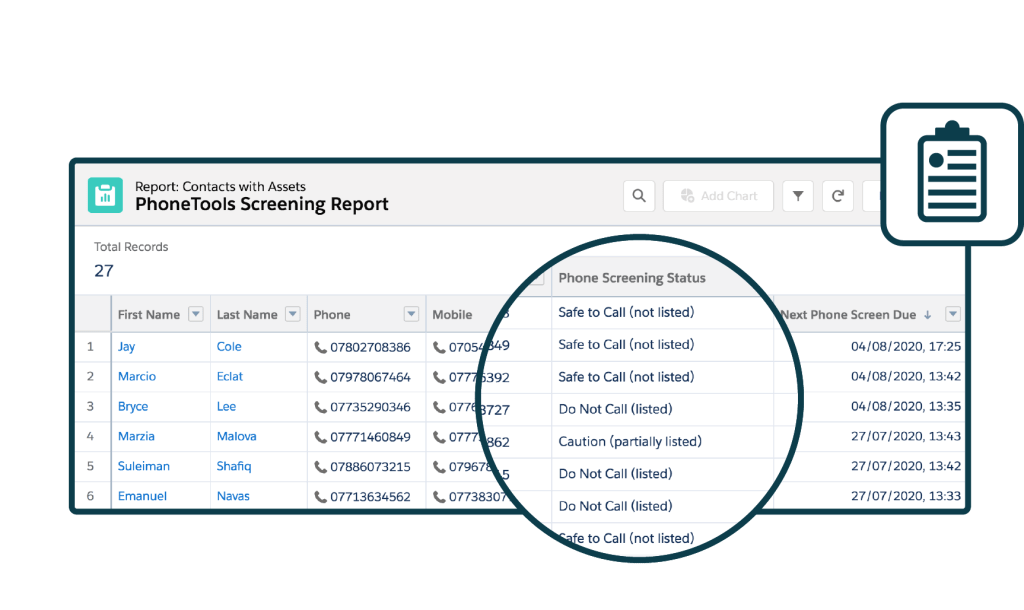
Maintain compliance with UK data privacy laws by screening your phone numbers against the Telephone Preference Service (TPS) and Corporate Telephone Preference Service (CTPS) databases. PhoneTools is a solution available on the Salesforce AppExchange that enables individuals and businesses to opt out of receiving cold calls. This simple, well-integrated AppExchange solution lets you run instant reports and include screening status in your outbound call queue, ensuring seamless compliance.

Contacting someone registered with TPS or CTPS is likely to upset them, damaging your brand’s reputation, and poses a significant legal risk. Failure to do so risks significant repetitional damage and hefty fines from the ICO.

Learn more about PhoneTools here

Join us in our next blog, where we dive deep into the world of cold calling and reveal how it can be a game-changer for your business. Don’t miss out on insights that could transform your sales approach!